



When we reported that Project Hail Mary had pulled off the biggest non-franchise opening weekend since Oppenheimer, we suspected this was just the beginning. Two weekends later, the numbers confirm it: this isn't just a good movie — it's a genuine cultural event.
The Numbers Keep Climbing
After its record-breaking $80.5 million domestic debut, Project Hail Mary refused to slow down. The film dropped only 32% in its second weekend, earning another $54.5 million domestically — a hold that actually outperformed Oppenheimer, which declined to $46.7 million in its second frame. As of this weekend, the film has crossed $164 million domestically and $300.8 million worldwide in just two weeks. For context, that's already 1.5 times its reported $200 million production budget.
That trajectory puts it on a clear path to surpass The Martian (2015), the previous Andy Weir adaptation, which finished at $228.4 million domestically on a $108 million budget. Project Hail Mary made more in its second weekend than The Martian made in its first.
Why Audiences Keep Showing Up
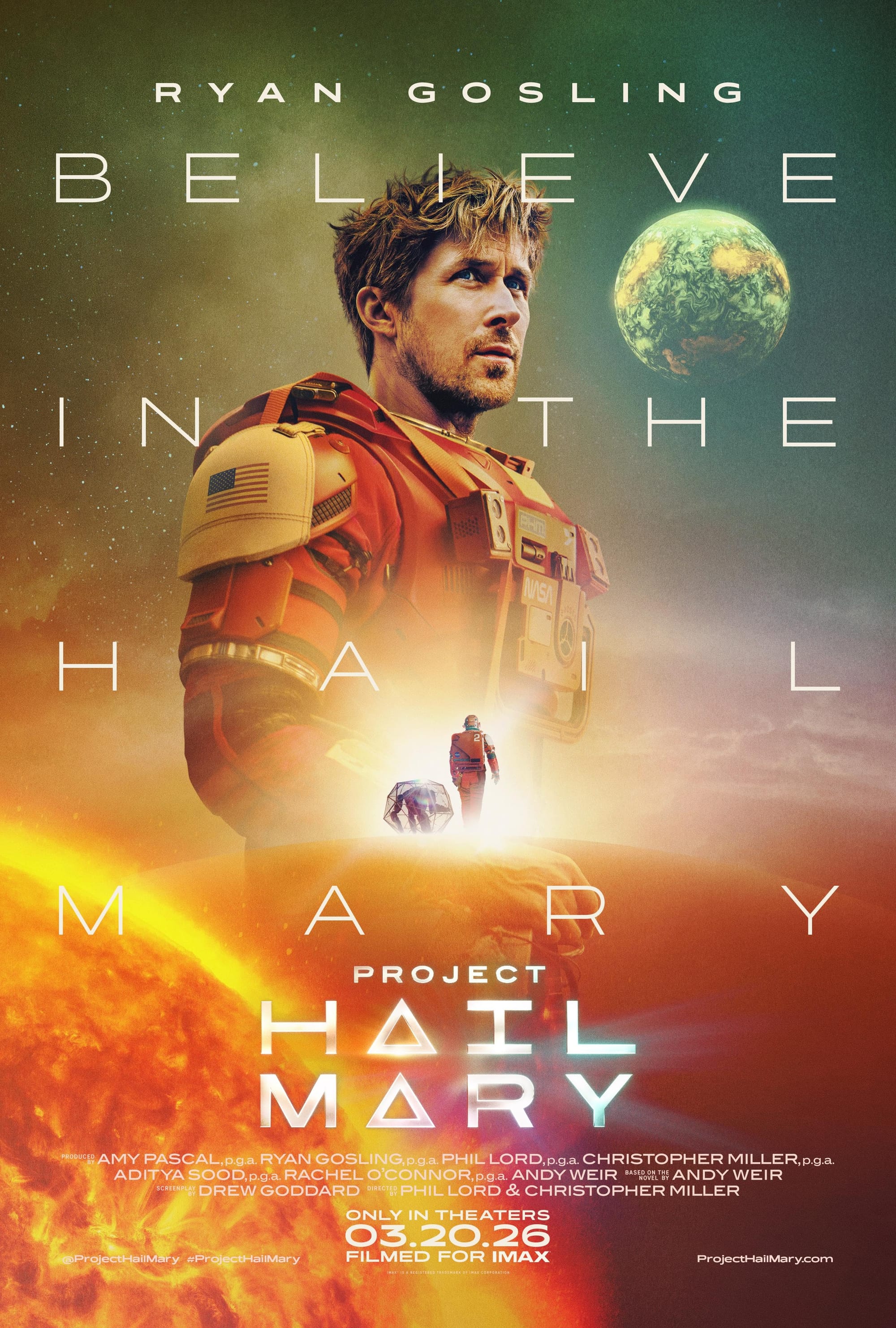
The staying power comes down to one thing: genuine word-of-mouth. The film holds a rare A CinemaScore alongside a 95% critics' score and 96% audience rating on Rotten Tomatoes. Ryan Gosling's performance as Dr. Ryland Grace — a middle-school science teacher who wakes up alone in deep space — has been widely praised for its wit and emotional range, with critics highlighting his chemistry with Rocky, the five-limbed alien voiced and puppeteered by James Ortiz .
The AP's Jake Coyle noted that Project Hail Mary "didn't face any significant new competition and kept premium format screens largely to itself" in its second weekend. IMAX and large-format screens, which drove 56% of opening weekend ticket sales, have continued to be a major driver of revenue.
A Win for Original Storytelling
The film's success is part of a broader, encouraging trend. As AP reported, Project Hail Mary adds to a "winning streak for originality at the movies," following hits like Sinners and Hoppers in 2026. In the first quarter of 2026, the top two domestic earners are both original films — Project Hail Mary and Pixar's Hoppers.
Variety had originally estimated the film would need $500 million globally to break even, but with strong legs and minimal competition through early April, that target is now looking very achievable. Boxoffice Pro had projected a $200 million domestic finish — a number that now reads like a conservative floor, not a ceiling.
What This Means for Hollywood
Amazon MGM took a $200 million swing on a sci-fi novel with no existing cinematic universe, no sequel hook, and a lead character who spends most of the film talking to an alien puppet. It paid off in every measurable way.
Directors Phil Lord and Christopher Miller have delivered something rare: a prestige blockbuster that critics love, audiences adore, and studios can point to as proof that original stories can still open like franchise films. Drew Goddard's screenplay — he also adapted The Martian — and IMAX cinematography by Greig Fraser (Dune, The Batman) elevated the film to a true theatrical event.
The Hail Mary didn't just work. It's becoming one of the biggest plays of the decade.


Discussion