


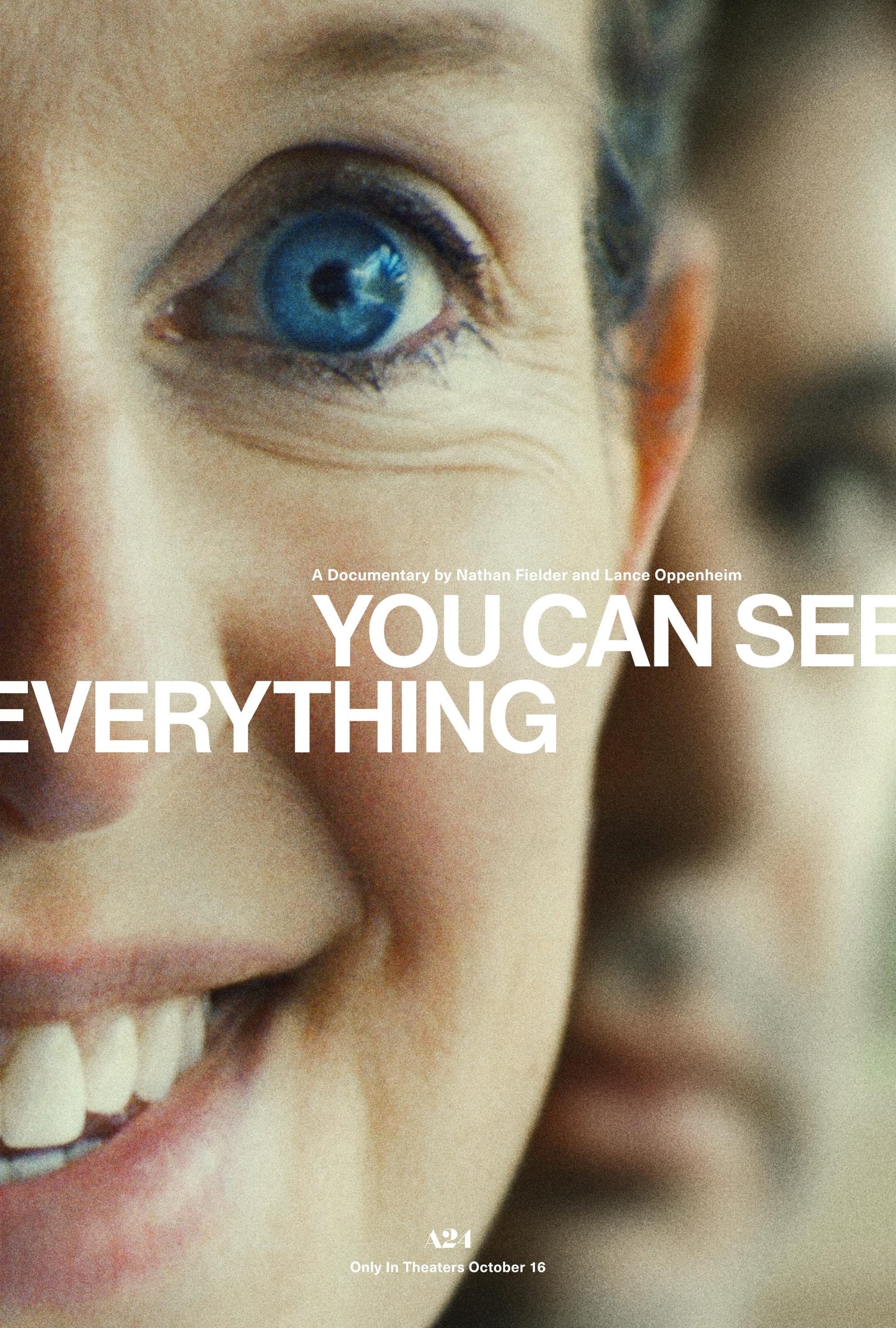
A three-hour documentary. 855 screens. More than 2,000 sellouts. You Can See Everything just proved audiences will show up for something genuinely strange.
The Premise
A24 describes the film this way: 34 days before she is sent to prison, notorious Silicon Valley founder Elizabeth Holmes invites a skeptical film crew to document her every move. Nathan Fielder and Lance Oppenheim directed. IMDb lists Fielder among the on-screen cast, along with Christopher Abbott, Phillip Andre Botello and Billy Evans.
The film premiered as a secret screening at the 53rd Telluride Film Festival. It runs 174 minutes.
Box Office Results
The opening was strong for any film, let alone a documentary.
- Opening weekend: an estimated $15 million, a strong No. 2 debut in North America.
- Theater count: only 855 theaters, averaging $17,544 per screen.
- Sellouts: more than 2,000, with lines around the block, according to Deadline.
- Record: the biggest documentary opening since Fahrenheit 9/11 in 2004.
- Versus expectations: Variety reported $1.75 million in Friday previews and a projection of $7–8 million for the weekend. The film roughly doubled that.
Deadline credits A24's meme-driven marketing, saying the studio "cracked the code on Gen Z again". Street Fighter won the weekend.
What Critics Say
The reviews are glowing. The New York Times calls it a "dizzying movie about truth, reality" in which Holmes and Fielder "chat and joust". The Los Angeles Times calls it a "mindbending" and "combative" documentary.
The Globe and Mail went furthest, headlining its review "the best, most essential movie of the year". AP's review describes the project as full of "mysteries," beginning with why Holmes chose Fielder at all. AZ Central called it "the most intriguing movie of 2026".
Our Take
This film works because it won't stay in one lane. It is a true-crime follow-up, a character study and a comedian's experiment in access, all at once. Fielder's presence keeps raising the same question. Who is shaping this story, the subject or the filmmakers?
The commercial lesson matters as much. A long, challenging documentary became a social event, and the sellouts and per-screen average show it. If you want to see it, a packed theater is best, because the room's reaction is part of the experience.


Discussion